What Are The 5 Rs? The Ultimate Guide
The UK Government’s guidance on using resources wisely shows that small changes in how organisations handle everyday materials can make a big difference over time. It’s not just about disposal, it’s about making simple, informed choices along the way.
The 5 Rs follow this same idea. They offer an easy framework for thinking about how items are used, reused, recycled and recovered, while encouraging a fresh look at everyday habits. In this guide, we explain what each of the 5 Rs means and how they can help organisations work in a smarter and more sustainable way.
What Are the 5 Rs?
The 5 Rs are a simple framework used to cut down waste and make day to day operations more sustainable. They stand for:
Reduce
Reuse
Recycle
Recover
Rethink
Each step encourages organisations to handle waste in a smarter way, starting with preventing waste in the first place and ending with making better choices around disposal.
At its core, the 5 Rs help businesses lower their environmental impact, improve efficiency, and cut unnecessary costs. They can be used across many industries, including highly regulated environments where safe waste handling is essential.
The rest of this guide walks through each of the 5 Rs in order, with practical examples to show how they work in real settings.
1.Reduce
The first step is reducing waste at the source. This means looking at where unnecessary waste is created and making small changes that stop it from piling up in the first place. It’s often the most effective way to cut costs and lower the environmental impact of day to day operations.
Examples of how organisations can reduce waste include:
choosing products or equipment that generate less single use material
reviewing stock levels to avoid over-ordering items that may later be thrown away
training teams to use the right bins so that waste isn’t placed in higher-cost streams by mistake
switching to longer lasting solutions that replace repeated single use items
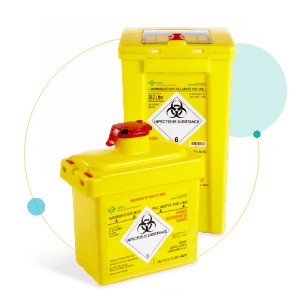
A good example of this in practice is the use of Stericycle’s reusable sharps containers, which replace large volumes of disposable plastic containers and help reduce overall waste output. Small changes like these can add up quickly and make waste handling simpler and more efficient.
2. Reuse
Reuse focuses on giving items a longer life before they become waste. Instead of throwing materials away after a single use, organisations look for safe and practical ways to use them again. This reduces the amount of waste produced and often lowers ongoing supply costs.
Examples of reuse in day to day operations include:
choosing durable containers or equipment that are designed for repeated use
introducing systems where certain items can be collected, cleaned and returned for reuse
replacing disposable items with longer lasting alternatives where this is appropriate
reusing secure consoles or lockable containers for storing sensitive documents before shredding
One clear example is the Stericycle Bio Systems - sharps management service, where containers are collected, sanitised and put back into circulation. This reduces reliance on single use plastics and supports a more sustainable approach to waste handling.
3. Recycle
Recycling is about turning suitable materials into something new instead of sending them to disposal. It’s a familiar step in the 5 Rs, but in practice it works best when waste is sorted correctly and only the right materials enter the recycling stream.
Examples of recyclable materials in everyday operations include:
cardboard and paper packaging
certain plastics that are clean and uncontaminated
metal items that can be processed after they’ve been made safe
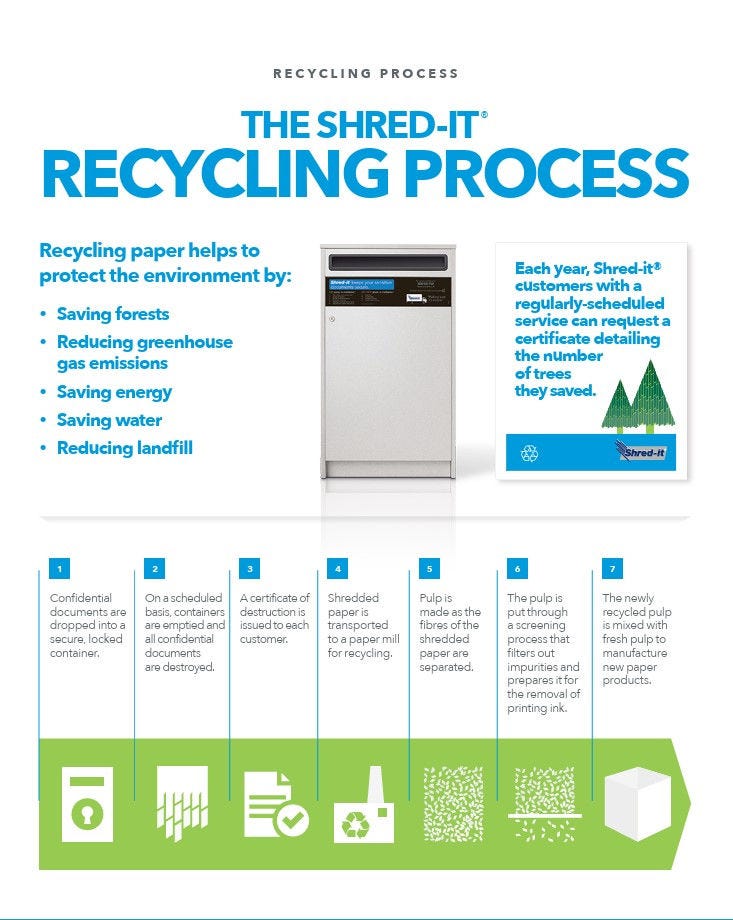
shredded confidential documents that are sent for secure recycling
A strong example of this in practice is Shred-it’s confidential waste disposal service. Documents are securely collected, shredded and then recycled into new paper products, helping organisations reduce their environmental footprint while keeping sensitive information protected.
Recycling programmes rely on good segregation and clear processes. When recyclable items end up in the wrong bin, they often can’t be processed and may need to be disposed of instead. Working with a provider that offers secure collection, clear guidance and end-to-end recycling support makes the system far more reliable.
4. Recover
Recovery is about getting value from waste when it can’t be reused or recycled. Instead of sending everything to landfill, certain materials can go through specialist treatment processes that turn waste into something useful, such as energy.
Examples of recovery in practice include:
sending suitable waste to energy-from-waste facilities
using advanced treatment systems that break down waste while generating heat or power
reducing the volume of waste that ends up in landfill by choosing smarter disposal routes
A clear example of this is Stericycle’s Alternative Waste Treatment (AWT) process, which uses controlled thermal technology to treat waste safely while supporting energy recovery. This approach helps organisations lower their environmental impact by diverting waste from landfill and making better use of materials that can’t be recycled.
5. Rethink
Rethink is about stepping back and looking at how waste is handled as a whole. It encourages organisations to review their current setup, identify gaps and make small improvements that help reduce waste, cut costs and improve efficiency over time.
Examples of rethinking waste processes include:
reviewing bin placement and signage to make segregation easier
running regular waste audits to spot where improvements can be made
choosing longer lasting products or closed loop systems that reduce single use waste
working with a waste partner that provides guidance, training and clear reporting
A simple way to rethink waste handling is by reviewing how waste is managed day to day and identifying where improvements can be made. Tools like our pre-acceptance waste audits help organisations understand their waste streams more clearly, support compliance and highlight practical steps to reduce waste. With the right guidance, businesses can make everyday waste decisions simpler, safer and more sustainable.
The 5 Rs in Waste Management
The 5 Rs in waste management give organisations a straightforward way to cut waste and work more sustainably. By focusing on reducing, reusing, recycling, recovering and rethinking waste, businesses can lower costs, improve efficiency and make better everyday decisions.
Putting these steps into practice can sometimes be tricky, especially when different waste streams have specific handling needs. Stericycle supports organisations with services that make this easier, from reusable container programmes and secure recycling to alternative waste treatment and waste audits.
With the right systems in place, the 5 Rs become much easier to follow, helping organisations manage waste in a safer and more sustainable way.
Looking for Clinical Waste Disposal?
Stericycle supports a wide range of sectors with safe and sustainable waste solutions. Whether you manage a GP practice, dental clinic, pharmacy, laboratory or care home, our services are designed to make waste handling easier and fully compliant.
If you’re reviewing how your organisation manages waste, explore our clinical waste disposal solutions to find the support that fits your needs.